
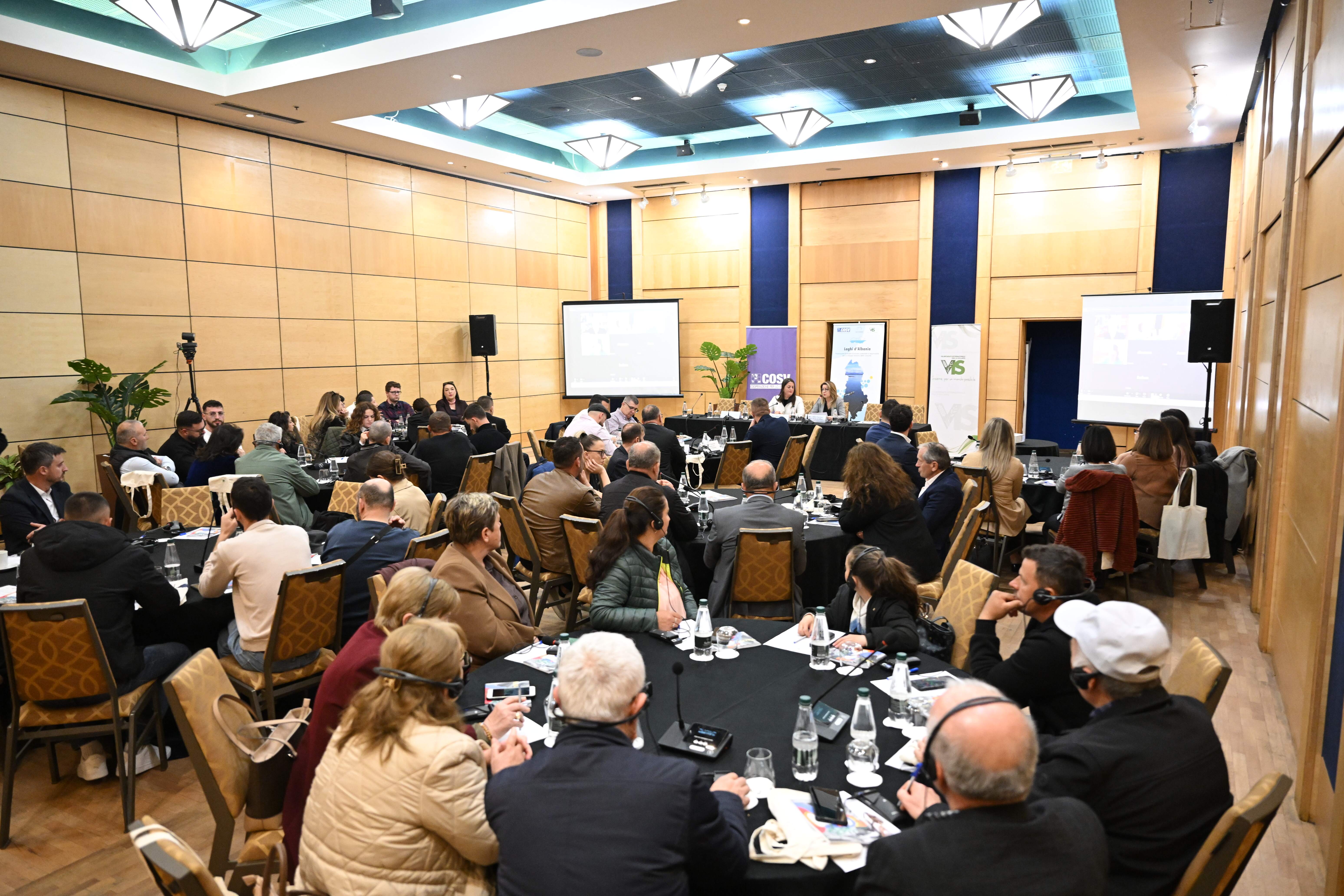
The “Lakes of Albania” project concludes with a ceremony in Tirana, marking the completion of a multi-stakeholder initiative focused on developing sustainable and responsible tourism and strengthening the local economy.
Funded by the Italian Agency for Development Cooperation (AICS) with a total budget of €2.59 million, “Lakes of Albania” was implemented by a partnership led by COSV, in collaboration with VIS and other national and international partners, in the areas of Pogradec (Lake Ohrid) and Shkodër – Malësi e Madhe (Lake Shkodër and the Albanian Alps), combining environmental protection with economic development through community-based approaches.
During its implementation, the project established and strengthened two participatory governance structures (Participatory Management Groups – PMGs), which later evolved into Local Action Groups (LAGs), contributing to coordination between institutions, the private sector, and civil society. Over 230 local stakeholders were involved in consultation processes, through 12 participatory workshops and 17 local meetings, leading to the drafting and adoption of two Sustainable Tourism Action Plans.
In terms of concrete interventions, the project supported approximately 27 community initiatives, including ecotourism infrastructures, re-development of public spaces, trail systems, and enhancement of local heritage. At the same time, over 100 micro, small, and medium-sized enterprises were supported through business development services, while more than 40 companies benefited from direct contributions under dedicated funds. Access to credit was strengthened through a microcredit fund that provided 84 loans to local operators, farmers, and entrepreneurs.
The project also promoted innovation and youth entrepreneurship through incubation programs and support for sustainable tourism start-ups. Educational activities involving over 600 students were conducted, focusing on environmental awareness, biodiversity, and sustainable tourism practices.
To strengthen the destinations’ visibility, two international tourism catalogs were developed, featuring over 80 local stakeholders and integrated tourism offerings. These were accompanied by promotional campaigns and public events, reaching an audience of over 20,000 people.
The project concluded with operational local structures, planning tools, and tested models of participatory territorial development, in line with the European Community-Led Local Development (CLLD) approach, with the aim of supporting the continuity of actions in the target areas.