In the centenary of the birth of Don Oreste Benzi, founder of the Papa Giovanni XXIII Community and the NGO Condivisione fra i Popoli, the “BenEssere Insieme” project concluded today in Albania. This three-year project, funded by the Italian Development Cooperation, focuses on job inclusion and independent living for people with mental and psychosocial difficulties.
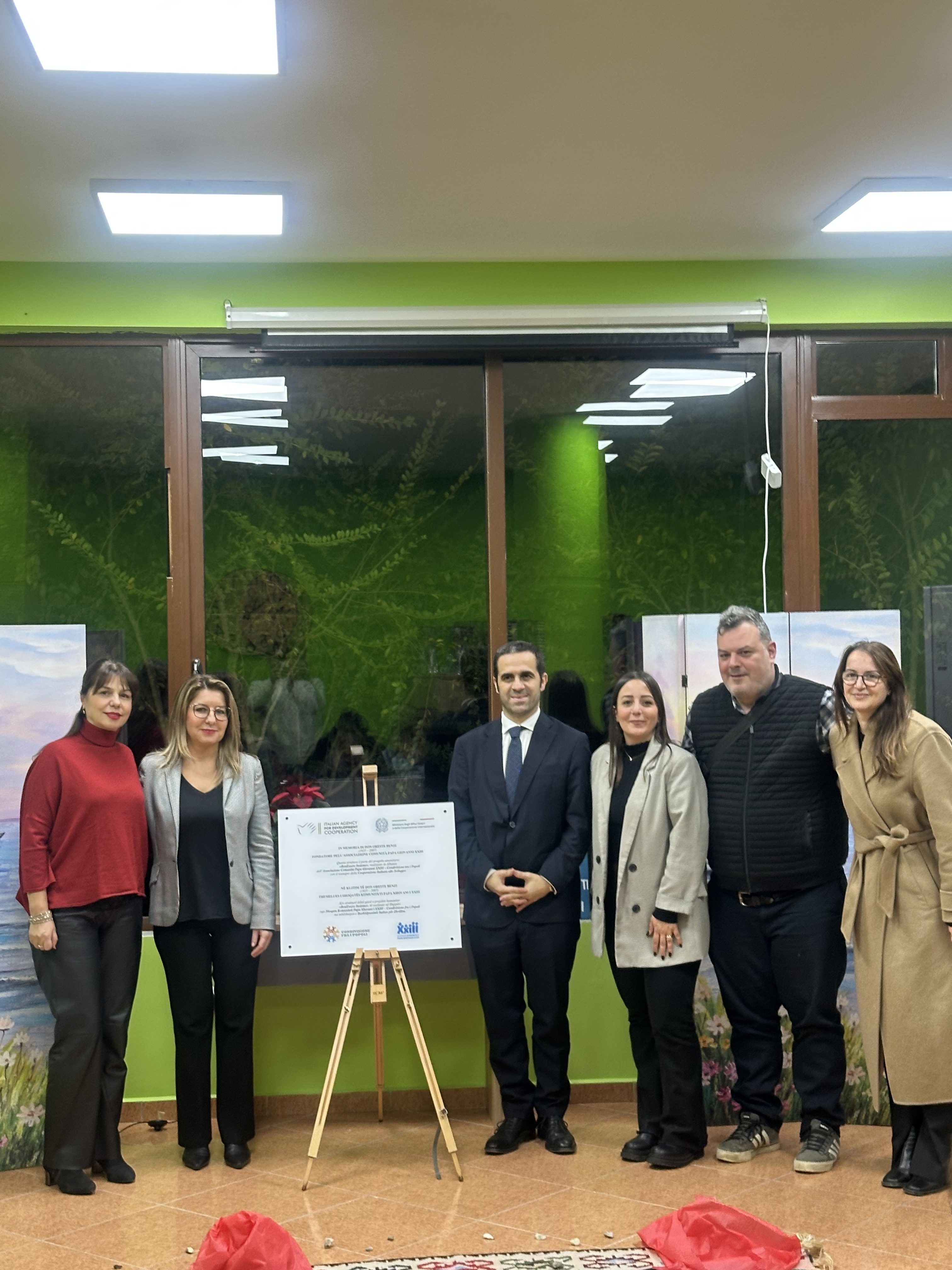
The commemorative plaque, donated by the Ministry of Foreign Affairs, was placed at the “Da Sandra” educational farm, one of the project’s most significant outcomes: a place where people with disabilities can gain professional training, experience horticultural therapy and animal-assisted activities, while also connecting daily with children and families who choose this space to rediscover balance, nature, and authenticity. This project was created to cultivate, together, trust and a sense of community.
The ceremony was attended by representatives of the project partners, Pierluigi Simonetti, Deputy Ambassador of Italy to Tirana, and Letizia Fischioni, AICS Tirana Acting Head of Office.
“It is a source of pride for me to be here,” said Deputy Ambassador Simonetti, “to remind us once again that the friendship and cooperation between Italy and Albania are not only expressed in our exceptional political, economic, and cultural relations; what unites us historically is also solidarity, the sense of giving dignity to each person, and the importance of social inclusion. The sense of solidarity that has distinguished this project is one of the most important values that Don Oreste Benzi preached until the last day of his life. With the unique charisma of a tenacious Romagnol, he dedicated himself to the least fortunate, the defenseless, and restored their dignity, making them feel part of a group, a society.”
AICS Tirana Acting Head of Office, Ms. Letizia Fischioni, continued: “These three-year project have not been without a foundation or a history, but are the concrete application of the moral and cultural legacy left by Don Oreste. By placing this plaque, we are not making a static gesture; rather, we are renewing our commitment to upholding the values he promoted. We are seeking to respect and implement his vision of an inclusive society. Inclusion is not understood merely as a gesture of compassionate assistance, but as an act of justice and restoration of the rights and dignity that, in Don Oreste’s vision, belong to every person in society.”
“It was a very emotional moment,” commented Marcello Requirez, Director of the “Frederik Prenga” Rehabilitation Center of the Pope John XXIII Community and Coordinator of the BenEssere Insieme project, adding: “A wonderful opportunity to remember Father Oreste, who inspired so many of our initiatives and my personal commitment as a missionary in Albania. The theatrical performance about his life, staged by our vulnerable young people, was also touching.”
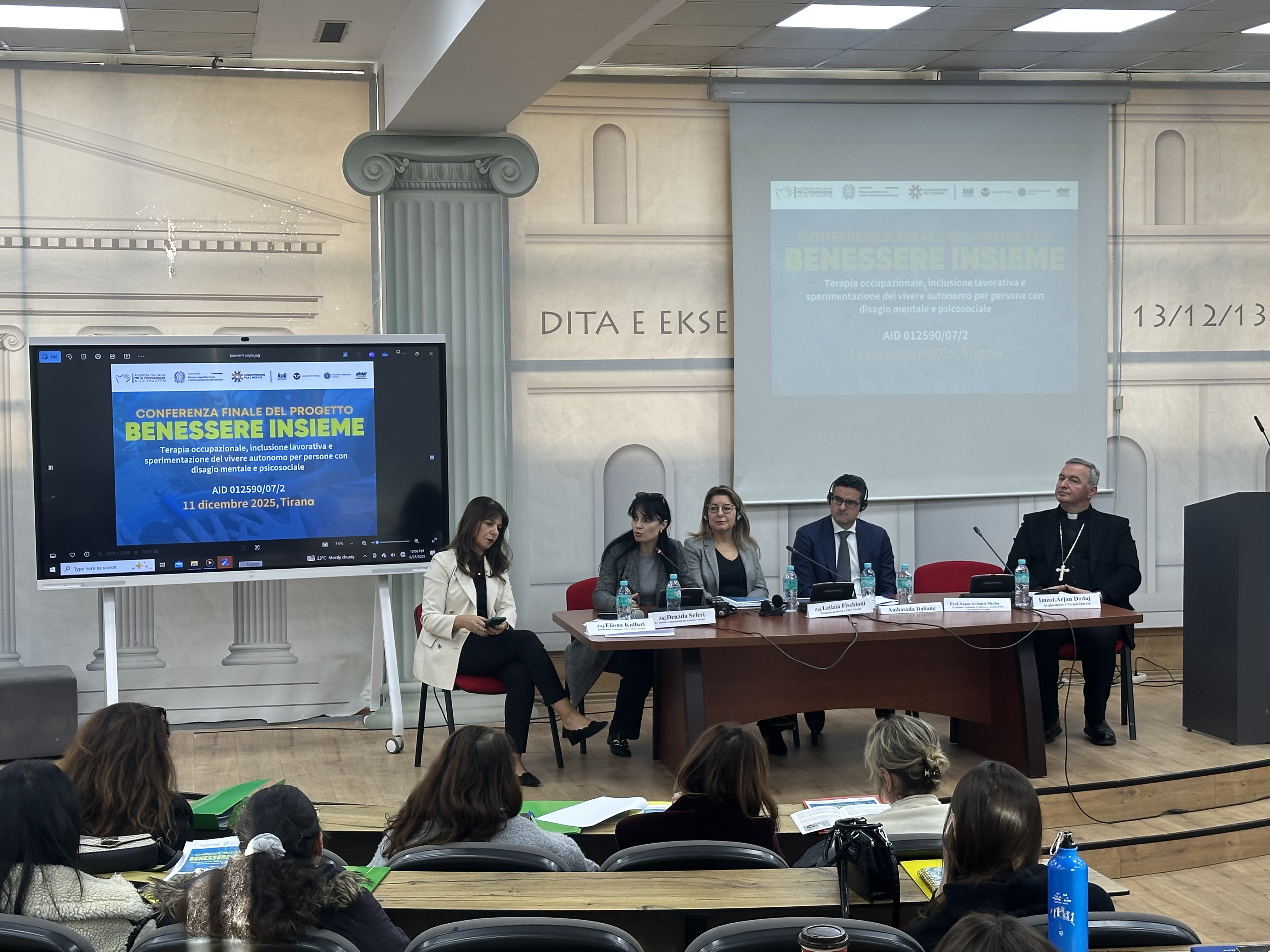
The event concluded an intense day, which began with a conference in the Aula Magna of the Faculty of Social Sciences in Tirana, attended by numerous young students, who shared experiences and best practices.
During the official greetings—which included speeches by Sergio Alias, First Secretary of the Italian Embassy in Albania, Archbishop Arjan Dodaj, and Migena Kokeri, Director of the Directorate for Social Protection and Inclusion of the Municipality of Tirana—the project’s unique nature was reaffirmed: one of the few projects in Tirana focusing not on economic or environmental development, but on human development and the inclusion of the most vulnerable in the social fabric.
During the conference, the main results achieved were highlighted:
- “Da Oreste” bakery and the “Da Sandra” educational farm as inclusive workplaces;
- The updating of the university curriculum of the Faculty of Social Sciences with the introduction of psychiatric rehabilitation as a subject;
- the activation of apartments for independent living for beneficiaries, some of whom now live in housing managed by the Community of Sant’Egidio in collaboration with the Municipality;
- the role of theater as a tool for expression, healing, and inner redemption
The project is giving an important legacy to the city: it opened new avenues, created concrete opportunities, and, above all, changed the way people with mental health difficulties are viewed, helping families feel less alone. It has reminded everyone that these people are a living part of our society, capable of contributing, growing, and often teaching much to those who encounter them.