
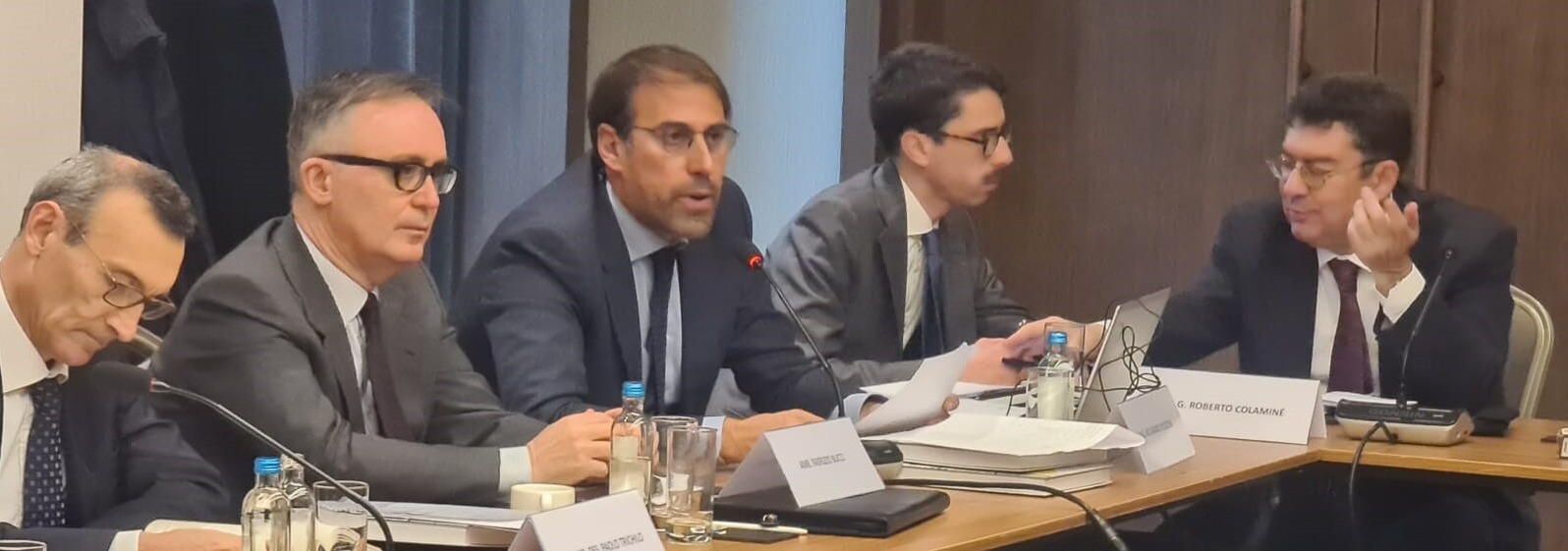
AICS Director Marco Riccardo Rusconi, together with Stefania Vizzaccaro, Head of the Tirana Office, and Letizia Fischioni, Deputy Head of the Office, attended the Meeting of Italian Ambassadors to the Adriatic-Balkan Area in Skopje, North Macedonia. The event was also attended by Deputy Director Roberto Colamine’ and the Deputy Head of Office V, Dr. Filippo Romanengo, representing the DGCS.
During the conference, Director Rusconi emphasized how the Italian Cooperation’s commitment to the Western Balkans, which began in the early 1990s, is deeply rooted in the country’s history and how, thanks also to our geographical proximity, it has allowed us to be a privileged interlocutor for the countries in the area and to consolidate relations between the two shores of the Adriatic. The Director then underlined the importance of the current role of Italian Cooperation in the area within the broader effort to integrate the region into the European Union, launched in 2014, with activities aimed at fostering dialogue and building bridges, and providing concrete demonstrations of how local communities are stronger together and can achieve higher levels of well-being and development, also strengthening the prospects for peace.
From this perspective, strengthening the regional approach to interventions is therefore crucial, and this is why the AICS Tirana office, currently responsible for cooperation interventions in five of the six Western Balkan countries (Albania, Bosnia and Herzegovina, Kosovo, North Macedonia, and Serbia), has first implemented twin initiatives in several countries over the past few years, such as NaturAlbania, NaturBosnia, and NaturKosovo, and then fully-fledged regional initiatives such as Culture & Creativity 4 Western Balkans, using European funds.
In the near future – within the framework of the 2024 programming period currently being finalized – this approach will be further strengthened with additional regional interventions focused on three long-term objectives: technical and professional training aimed at concrete employment opportunities in the agri-food and tourism sectors; the promotion of digitalization even in traditional sectors such as agriculture and rural development; and the promotion of inclusive institutional strengthening processes in various fields, including disaster risk reduction, where Italy can leverage internationally recognized expertise through the involvement of System Italy stakeholders.
Regional interventions, Director Rusconi concluded, represent added value for multiple reasons: they are tools for promoting dialogue and collaboration between experts and professionals in key development sectors, fostering a better understanding of the region’s challenges and opportunities, with a multiplier effect on the results and effectiveness of actions; In addition to the technical results, they also create the conditions to facilitate dialogue at the political level, strengthening the reconciliation process in the area.