
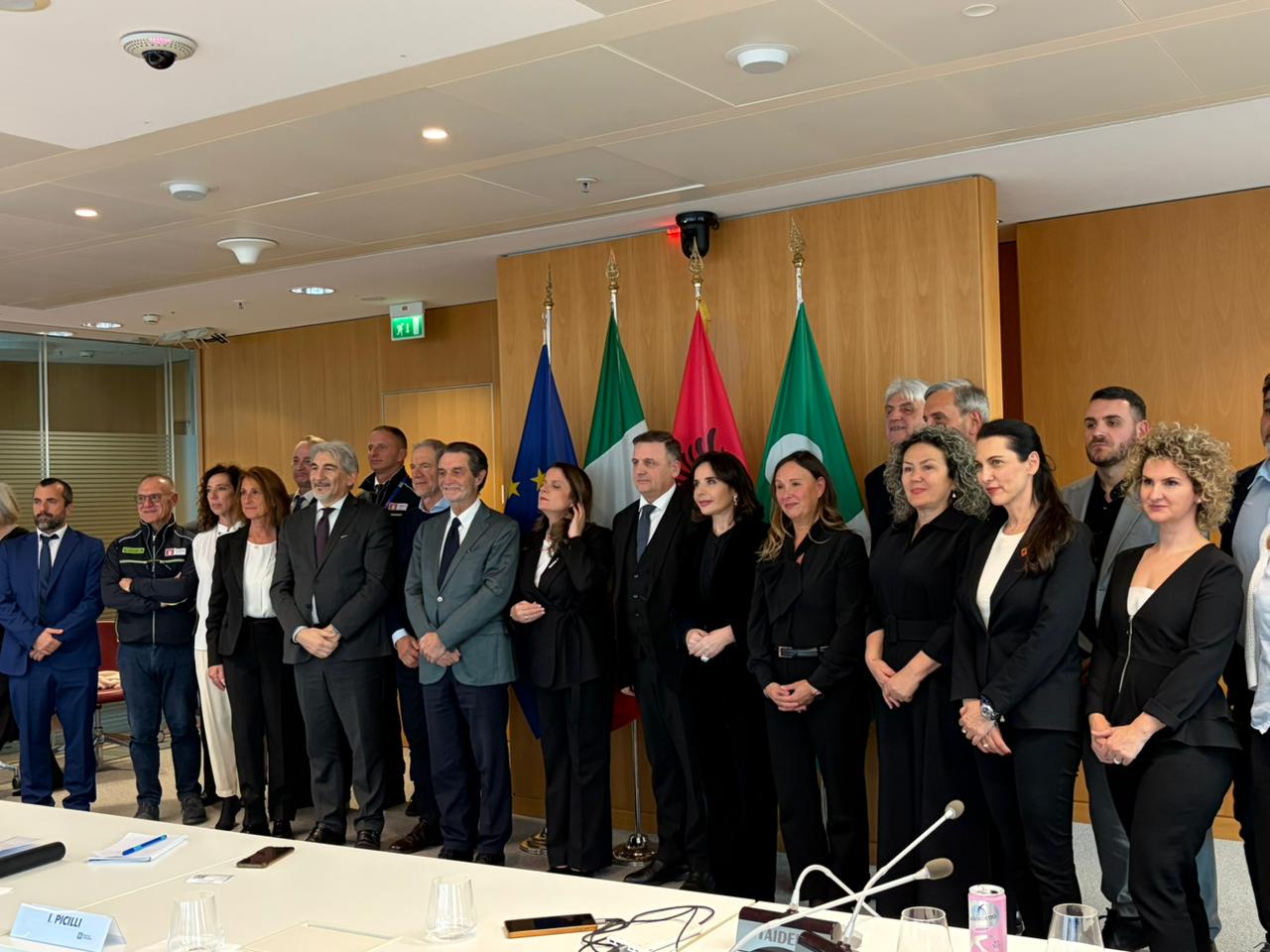
Milan, March 24, 2026 – Safer childbirth conditions, improved newborn care, and a more efficient emergency network: this is the multiple goal of “PRISMA – Strengthening and Reinforcing Maternal and Child Infrastructures and Services in Albania,” a project presented at Palazzo Lombardia by the implementing agencies and donors. It is a key component of the MATHERNA program (Maternal and Neonatal Health Advancement in Albania), which also includes ANMA (Advancing Neonatal and Maternal Health in Albania).
PRISMA is funded by the Italian Ministry of Foreign Affairs and International Cooperation (MAECI) through the Italian Agency for Development Cooperation (AICS) with a budget of €2 million and will last three years. The operational arm will be the ASST Fatebenefratelli Sacco in Milan, which will lead the training of doctors, nurses, and midwives in Albania, with additional training in Italy. Training will be provided by Lombardy specialists in Albania and Albanian colleagues in Milan’s hospitals. New protocols will also be implemented with clear and shared rules to manage emergencies in the delivery room and ensure a faster network for transporting critically ill newborns to specialized centers.
The presentation was attended by the President of the Lombardy Region, Attilio Fontana; the Regional Councilor for Welfare, Guido Bertolaso; the Undersecretary to the Presidency with responsibility for International and European Relations, Raffaele Cattaneo; the Director of the Human Development Office of AICS Rome, Annamaria Iotti; the Director General of the ASST Fatebenefratelli Sacco, Maria Grazia Colombo; the Director General of AREU – Regional Emergency Agency, Massimo Lombardo; the Albanian Deputy Minister of Health, Eugena Tomini; and the Albanian Consul in Milan, Anila Pojani.
“With the PRISMA project,” said President Fontana, “Lombardy confirms its international vocation and solidarity. Providing our clinical expertise to protect the health of mothers and children in Albania is a source of pride. We are not just exporting organizational models, but we are building a bridge of knowledge that will make treatments safer and more modern, bringing the Albanian healthcare system closer to European standards.”
“True cooperation,” added Councilor Bertolaso, “is achieved by investing in people. With this project, we are not just providing equipment, but also a method. Training healthcare personnel and sharing emergency protocols between our hospitals and those in Albania means giving every child the same opportunity for care, regardless of where they are born. Lombardy is deploying its excellence, in this case the ASST FBF-Sacco and AREU hospitals, for a concrete investment in life.”
Undersecretary Cattaneo emphasized that “Relations between Lombardy and Albania, strengthened by the institutional mission in January 2024 and, more recently, by the visit of President Bajram Begaj, demonstrate how solid collaborations can generate concrete results, such as the MATHERNA project in the field of healthcare cooperation. Initiatives of this kind play a particularly significant role in a strategic area like the Balkans, crucial for the future of Europe.”
“The Italian Cooperation,” Dr. Iotti emphasized, “supports the MATHERNA program with the aim of structurally strengthening maternal and child services in Albania. It does so together with excellent partners in the Lombardy healthcare system, leveraging their expertise to strengthen the capabilities of Albanian healthcare workers and improve the quality of community care.”
“Our professionals,” concluded General Manager Colombo, “have embraced the challenge with enthusiasm. Providing clinical experience and training means making a concrete contribution to strengthening the maternal and child healthcare network in Albania. The goal is to build increasingly consistent and integrated care pathways between the two countries.”
“AREU,” concluded General Manager Lombardo, “is deploying Lombardy’s excellence in emergency care for the project in Albania. The goal is to transfer organizational models and cutting-edge technologies to strengthen the local healthcare network. This commitment confirms AREU as a logistical and operational pillar of international cooperation.”